

How to get more dance students: 15 strategies to grow your dance studio
To get more dance students, make your studio easy to find, show what makes it different, lower the barrier to a first class and follow up every enquiry until it becomes a registration. These 15 strategies cover each step.

Every dance studio wants to grow its student base, fill more classes and build a community of people who enjoy coming back every week. But attracting new students is not always easy.
You might offer excellent classes, have experienced instructors and a welcoming studio, yet still struggle to get enough new registrations. Social media posts generate likes but few enquiries, people visit your website without signing up, and word-of-mouth recommendations are not always consistent.
The problem is often not the quality of your dance classes. It is how effectively your studio reaches potential students, communicates its value and converts interest into registrations.
Attracting more dance students requires a combination of visibility, marketing, community engagement and a well-organised registration process.
Whether you run a children's ballet school, an adult salsa studio, a contemporary dance academy or a multi-style dance school, the following strategies can help you reach more people and turn them into paying students.
The dance student acquisition funnel
Every new student follows the same journey, from first hearing about your studio to recommending it to their friends. Each strategy in this guide strengthens one or more of these stages, and two apply to all of them: knowing your ideal students (1) and measuring where they come from (15).
Stage | Where it happens | Strategies |
|---|---|---|
1. Awareness | Google, social media, referrals, partnerships | 3, 5, 6, 10, 11 |
2. Interest | Website visits, enquiries, class information | 2, 4, 12 |
3. Trial | Free introductory class, open day, workshop | 7, 9, 13 |
4. Registration | Online enrolment, membership and payment | 4, 7, 12 |
5. Engagement and referrals | Attendance, communication, retention and recommendations | 8, 14 |
1. Identify your ideal dance students
Before spending money on advertising or creating social media content, understand exactly who you want to attract.
Different dance studios appeal to different audiences, and your marketing should reflect their interests, needs and motivations.
For example, a children's dance school primarily markets to parents, not children. Parents are usually the decision-makers when it comes to registrations, payments, schedules and choosing extracurricular activities.
An adult dance studio, on the other hand, communicates directly with potential students who might be looking for a hobby, a social activity, fitness or an opportunity to learn something new.
Start by identifying your main audiences.
For children's dance schools
- Parents looking for extracurricular activities.
- Families interested in ballet, jazz, hip-hop or contemporary dance.
- Parents searching for activities that develop confidence and coordination.
- Families looking for structured training and performance opportunities.
- Parents interested in competitive dance programmes.
For adult dance studios
- Beginners who have never attended a dance class.
- People looking for social activities.
- Couples interested in ballroom, salsa or bachata.
- Adults looking for a new hobby.
- Experienced dancers looking for advanced training.
- People interested in dance as a recreational activity.
You can also divide your audiences by location, age group, dance style and experience level.
Once you understand who you want to reach, your marketing becomes more focused.
Promote programmes, not "dance for everyone"
Instead of advertising "dance classes for everyone", you can promote specific programmes to people who are most likely to register.
2. Define what makes your dance studio different
Your studio is competing for people's time, attention and money.
Potential students might have several dance schools to choose from, so you need to communicate why they should choose yours.
Think about what makes your studio special.
It could be:
- Experienced and internationally recognised instructors.
- A welcoming environment for complete beginners.
- Specialised children's dance education.
- Small class sizes and individual attention.
- Opportunities to participate in performances and competitions.
- A particular dance style that is difficult to find locally.
- Flexible schedules for working adults.
- A strong community and social atmosphere.
- Multiple dance styles available in one location.
Turn these strengths into a clear message.
Example: from a class list to a message
For example, instead of simply saying "We offer ballet classes", you could communicate that your school provides structured ballet education for children, with experienced teachers and regular performance opportunities.
For an adult salsa studio, you might emphasise that complete beginners can start without previous dance experience or a partner.
Your website, social media profiles, advertisements and promotional materials should communicate the same core message.
People should understand what makes your studio worth visiting within a few seconds.
3. Optimise your Google Business Profile
When someone searches for dance classes nearby, Google can display local business results alongside maps and organic website listings.
This makes your Google Business Profile one of the most valuable marketing tools for a dance studio.
Start by claiming and verifying your business profile.
Make sure it contains:
- Correct studio name.
- Accurate address and map location.
- Contact telephone number.
- Website address.
- Opening hours.
- Relevant business category.
- Description of your dance programmes.
- High-quality photographs.
- Booking or registration links, where supported.
Add photographs regularly.
Show your actual studio, instructors, dance classes, performances and facilities. Genuine photographs help prospective students understand what to expect when they visit.
Pay attention to your business description. Explain which dance styles you teach, who your classes are suitable for and which areas you serve.
Example business description
"Professional dance classes for children and adults in [your city], including ballet, contemporary, jazz and hip-hop. Beginner and advanced programmes available."
Encourage satisfied students and parents to leave genuine Google reviews.
Respond professionally to reviews, including negative ones. A thoughtful response demonstrates that you take feedback seriously.
How Google ranks local results
Google explains that local results are influenced primarily by relevance, distance and prominence. Complete business information and reviews are among the elements that can help your profile become more useful and competitive. You cannot simply pay Google to improve your local ranking.
4. Build a website that converts visitors into students
Your website should be more than a digital brochure.
It should actively help prospective students discover your programmes, understand your pricing and register for classes.
A common problem with dance studio websites is that visitors can find photographs and general information but cannot easily take the next step.
Make sure your website includes:
- A clear introduction to your dance school.
- Individual pages for major dance styles.
- Children's and adult programmes.
- Class schedules and available places.
- Instructor profiles.
- Membership and pricing information.
- Student testimonials.
- Frequently asked questions.
- Contact details and location.
- Online registration and booking options.
Two guides go deeper: how to build a dance studio website with online bookings and how to publish your dance class timetable online.
Place clear calls to action throughout your website
Examples include:
- Book your first dance class.
- Explore our class schedule.
- Find your dance programme.
- Register online.
- Try a beginner class.
Make sure the registration process works well on mobile devices. Many parents will discover your studio through Google or social media on their phones.
Ideally, visitors should be able to select a class, provide their information and complete their registration without having to exchange several emails with your team. Our guide to online dance student registration shows how.
Stepsi's website builder publishes your timetable, memberships and online booking on your studio's own website, and its widgets add the same booking to a website you already have.
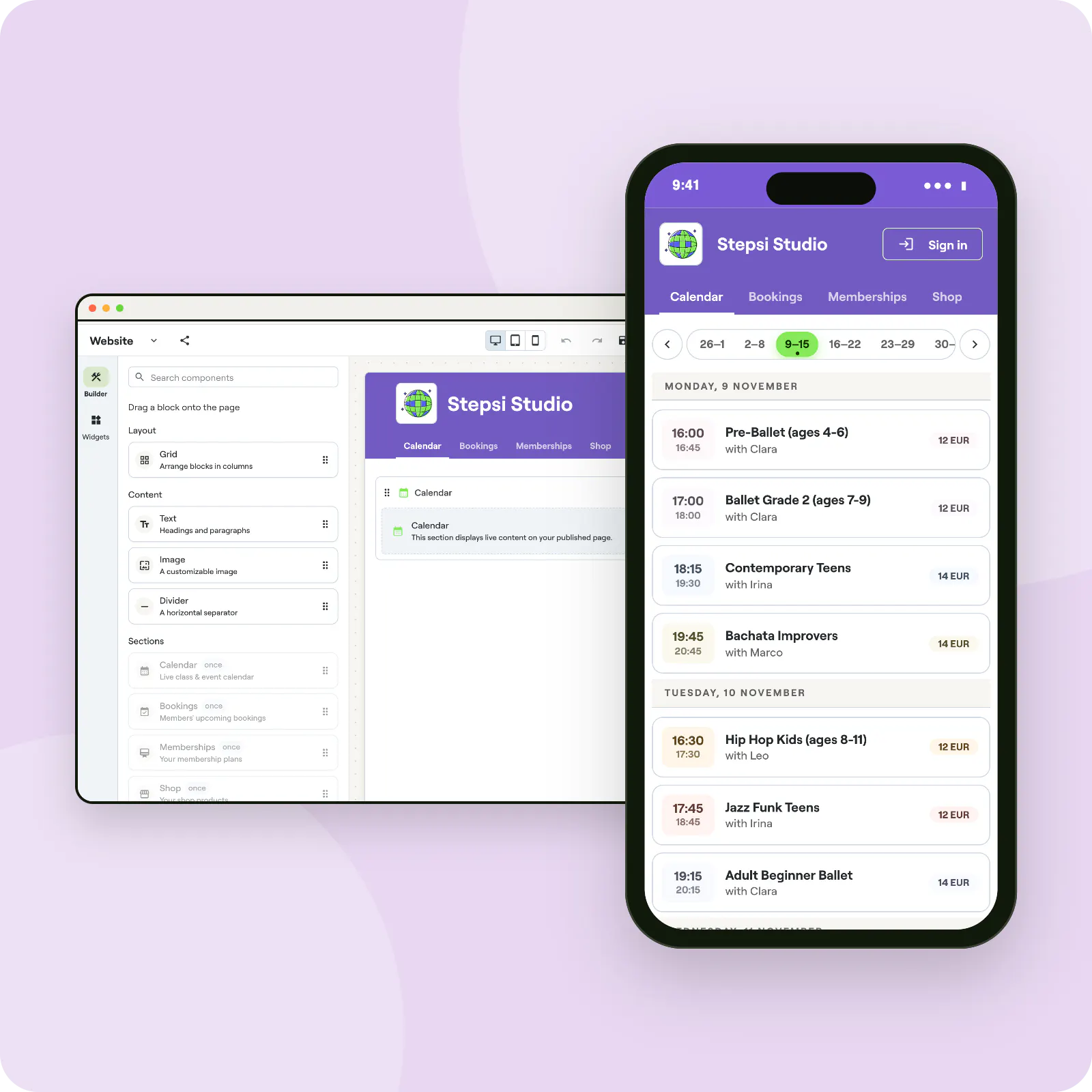
The easier you make joining, the fewer interested people you lose along the way.
5. Use local SEO to attract people searching for dance classes
Local SEO helps your website appear when people search for dance classes in your area.
This is particularly valuable because dance studios generally serve specific geographic communities.
People rarely travel extremely long distances for their regular weekly classes, so attracting relevant local visitors is more important than generating traffic from all over the country.
Start by identifying the searches potential students might use.
Examples include:
- Dance classes in [your city].
- Ballet classes for children in [your city].
- Adult salsa classes in [your city].
- Beginner bachata classes near me.
- Hip-hop dance school in [your city].
- Contemporary dance classes for teenagers in [your city].
Create dedicated pages for your most important programmes and locations.
For example, if you offer children's ballet and adult salsa classes, each should have its own useful page rather than relying on one generic page describing every programme.
Include genuine local information. Explain where the classes take place, who teaches them and who they are suitable for.
Articles for local questions
You can also publish useful articles targeting locally relevant questions.
For example:
- "Where to find beginner salsa classes in [your city]"
- "What to expect from your child's first ballet class in [your city]."
One useful page per audience
Avoid creating dozens of nearly identical city pages with only the location name changed. Each page should offer genuinely useful information for the people it targets.
6. Create engaging Instagram and Facebook content
Social media is an excellent way to show people what makes your dance studio special.
Unlike search advertising, where people are actively looking for a service, social media also allows you to reach people who might not have considered joining a dance class yet.
Your content should showcase the experience of being part of your studio.
Here are some useful content ideas:
Content | What to share |
|---|---|
Class highlights | Short videos showing real classes, choreography and different dance styles. |
Student achievements | Celebrate performances, competitions, progress and personal milestones. |
Instructor introductions | Introduce your teachers and explain their experience and teaching approach. |
Behind the scenes | Show rehearsals, preparation, studio activities and everyday moments. |
Educational content | Share beginner dance tips, stretches, basic steps and answers to common questions. |
Funny and relatable content | Use dance-related memes and entertaining situations that students and parents can identify with. |
Studio announcements | Promote new classes, workshops, open days and registration periods. |
Testimonials | Share genuine feedback from students and parents, with their permission. |
Try combining different content formats rather than publishing only promotional posters.
Short videos are particularly useful for demonstrating what a dance class actually looks like.
A parent considering junior ballet might be more interested in seeing a welcoming children's class than reading a long list of programme features.
Include your location and a relevant call to action in promotional posts.
Example promotional post
"Looking for ballet classes for your child in [your city]? Join our beginner programme and discover the joy of dance. Register through the link in our bio."
7. Offer free trial classes or introductory offers
One of the biggest barriers to joining a dance studio is uncertainty.
Someone who has never attended a dance class might wonder whether they will enjoy it, whether they are good enough or whether the atmosphere will suit them.
A free trial class helps remove that uncertainty.
It allows prospective students to experience your teaching, meet the instructor and see the studio before committing to a membership.
You can offer introductory classes for:
- Children starting ballet or jazz.
- Adults trying salsa or bachata.
- Complete beginners.
- Students interested in a new dance style.
- People returning to dance after a long break.
Make the trial experience welcoming and well organised.
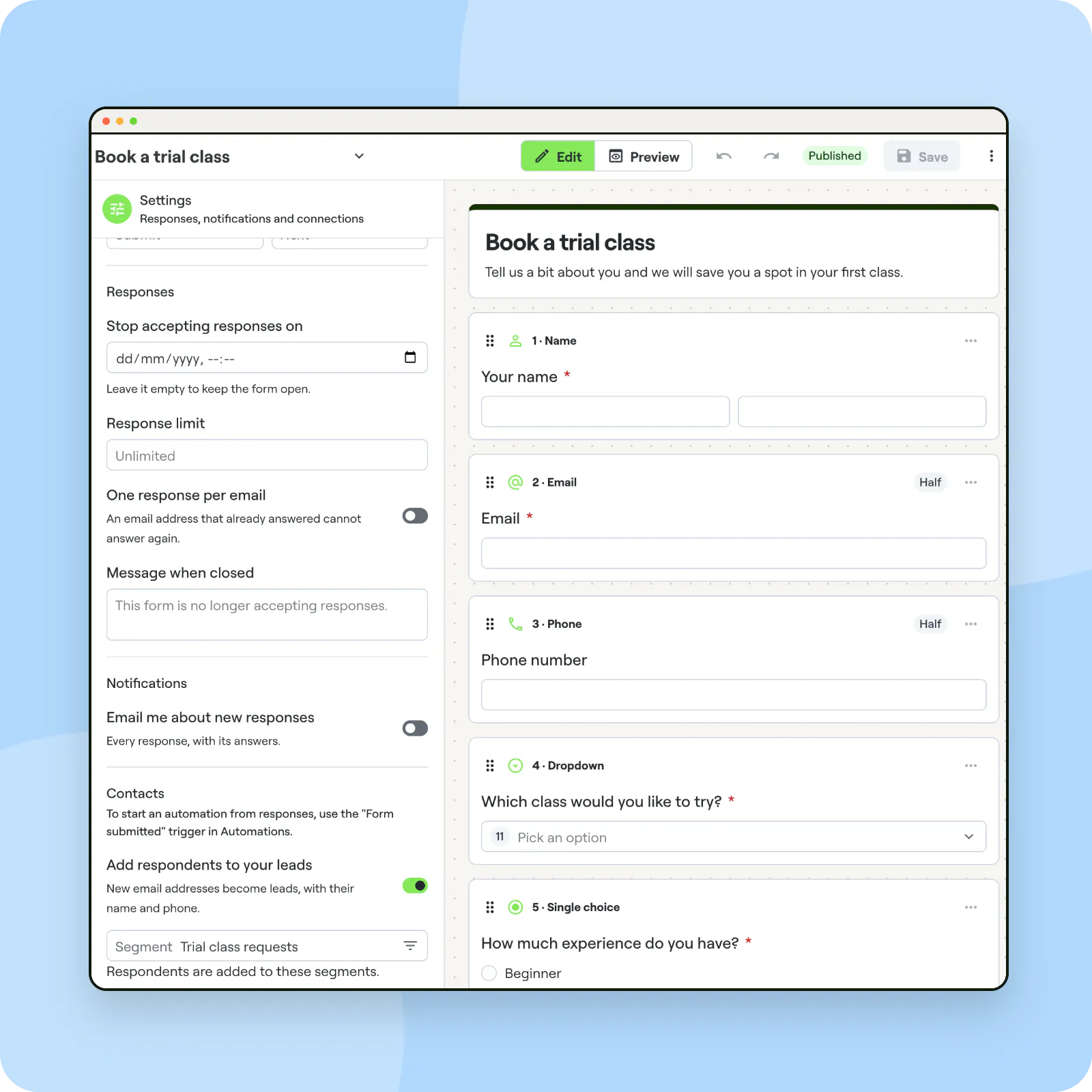
In Stepsi, the Book a trial class form saves every request as a lead and can add it to a segment, such as Trial class requests.
Before the class, send a confirmation explaining where to arrive, what to wear and what to expect.
After the session, follow up with a friendly message asking how the experience went and explaining the available membership options. It helps to create attractive dance studio membership plans for new students to choose from.
You can also consider introductory offers such as:
- First class free.
- First week at a reduced price.
- Discounted beginner packages.
- A special introductory membership.
Discounts are a door, not the strategy
Be clear about the conditions and avoid relying on discounts as your only marketing strategy.
The purpose of a trial is to let people experience the value of your studio and make it easier for them to become regular students.
8. Turn existing students into a referral network
Your existing students and parents can be one of your strongest sources of new registrations.
People often trust recommendations from friends, family members and other parents more than advertisements.
Create a referral programme that encourages satisfied members to introduce new students.
For example:
- An existing member invites a friend.
- The friend registers and purchases a membership.
- Both receive a reward.
Possible rewards include:
- Discount on the next membership.
- Free class.
- Workshop discount.
- Loyalty points.
- Studio merchandise.
- Special event invitations.
For children's dance schools, parents can introduce other families from their school, neighbourhood or social circles.
For adult dance studios, members might invite colleagues, friends or partners.
Make referrals easy.
Give members a shareable invitation link or referral code and explain exactly how the reward works.
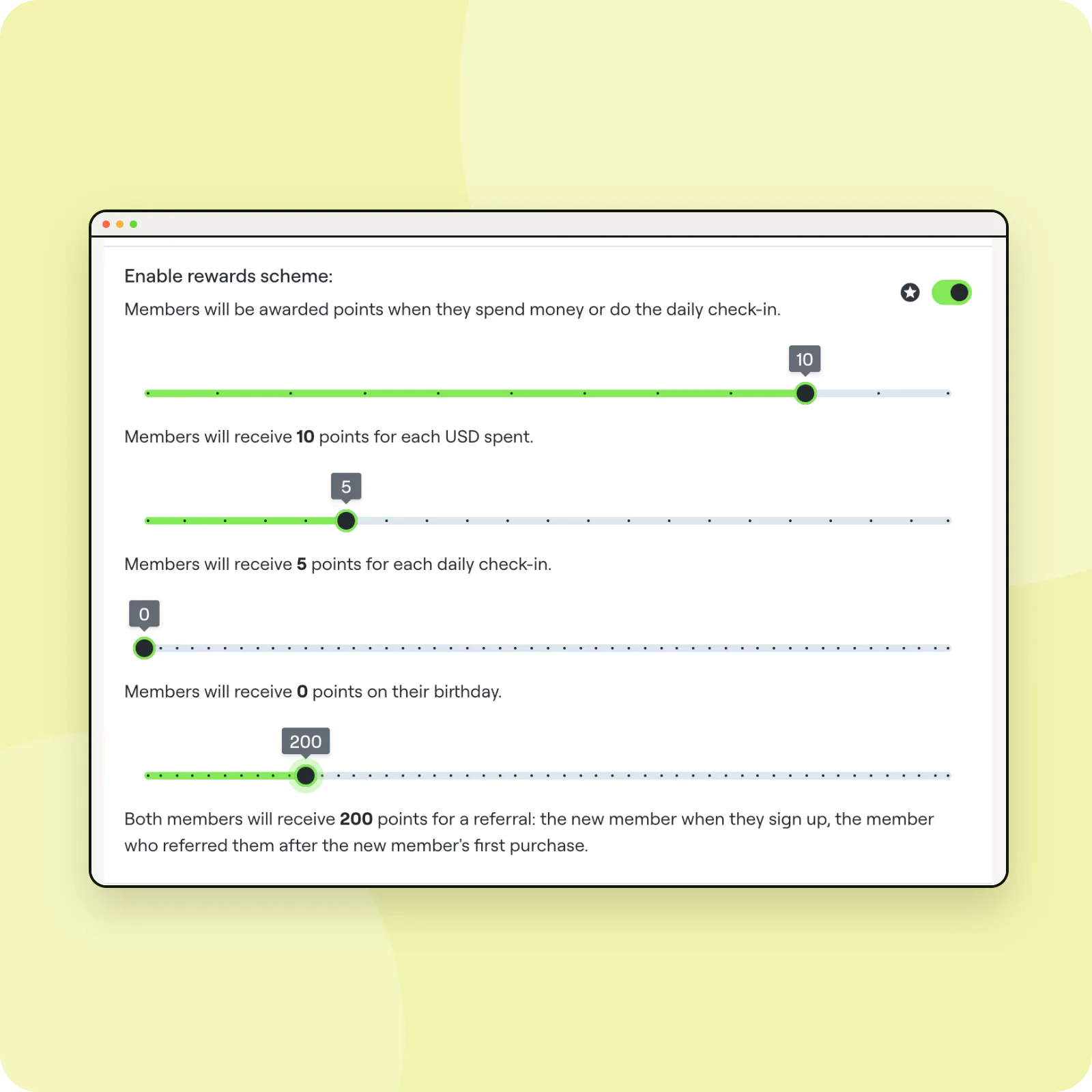
In Stepsi, the rewards scheme can give both members points for a referral: the new member when they sign up, and the member who referred them after the new member's first purchase.
You can also run occasional referral campaigns around the beginning of a new term.
Example: a back-to-school referral campaign
"Bring a friend to our beginner dance programme this September. When they join, you both receive a special membership discount."
Track referrals that turn into registrations
Track referral activity so that you can understand which campaigns generate actual registrations.
A referral programme works best when the reward is attractive but the class experience itself remains the main reason people recommend your studio.
9. Organise open days and free dance events
Open days give prospective students a chance to visit your studio, meet instructors and try several dance styles.
They are particularly useful when launching a new programme or preparing for a new school term.
Instead of asking people to commit to a membership immediately, invite them to explore the studio.
You could organise:
- Free beginner dance sessions.
- Children's dance discovery days.
- Adult salsa and bachata introductions.
- Open ballet classes.
- Instructor demonstrations.
- Mini workshops.
- Studio performances.
- Community dance evenings.
Promote the event several weeks in advance through social media, local groups, your website and existing members.
Use an online registration form so you know how many people to expect. Our guide shows how to organise dance workshops and open days with online registration.
During the event, make it easy for visitors to find information about upcoming classes and register.
You can also collect enquiries from visitors who are interested but not ready to join immediately.
Give every open day a next step
An open day should have a clear next step, such as booking a trial class or registering for the next beginner programme.
10. Partner with local schools and businesses
Your local community can provide many opportunities to reach new students.
Think about organisations that already interact with your target audience.
For children's dance schools
- Primary schools.
- Nurseries.
- After-school programmes.
- Children's activity centres.
- Community centres.
- Parent organisations.
- Local event organisers.
For adult dance studios
- Universities.
- Local companies.
- Fitness centres.
- Hotels.
- Community organisations.
- Social clubs.
- Wedding service providers.
You could offer a free introductory dance workshop, distribute information about your programmes or organise a joint event.
Partnership examples
For example, a children's dance school could organise a short ballet demonstration at a local school event.
An adult salsa studio could partner with a local venue to host a beginner social dance evening.
These partnerships introduce your studio to people who may not discover it through online searches.
Focus on building relationships that provide genuine value to both organisations rather than simply asking businesses to distribute promotional leaflets.
11. Run targeted online advertising campaigns
Paid advertising can help you attract students more quickly, particularly when introducing a new class or filling places before a new term.
Two particularly useful channels are Google Ads and Meta Ads.
Google Ads
Google Search campaigns can target people actively searching for dance classes.
For example, you could target searches such as:
- Children's ballet classes in your city.
- Adult salsa lessons.
- Beginner hip-hop classes.
- Dance schools near a specific area.
Create separate campaigns for important programmes rather than sending every visitor to the same homepage.
Someone searching for children's ballet should land on your children's ballet page, where they can view the schedule and register.
Facebook and Instagram Ads
Meta advertising allows you to promote classes using photos and videos.
You can create campaigns targeting relevant geographical areas and audiences.
For example:
- Parents within a reasonable distance of your studio.
- Adults interested in salsa and ballroom dancing.
- People interested in local dance events.
- Previous website visitors, where appropriate consent and tracking arrangements are in place.
Test different creatives, audiences and offers.
Measure registrations, not impressions
Do not judge campaign performance only by impressions, likes or clicks.
Measure how many people submit enquiries, book trial classes and ultimately become paying students.
12. Collect enquiries and follow up with prospective students
Not everyone who visits your website or sends a message is ready to register immediately.
Some parents want to compare several dance schools. Others need to check their children's schedules before making a decision.
This does not mean you have lost them.
Treat enquiries as leads and organise them systematically.
For every prospective student, try to record:
- Name.
- Contact details.
- Preferred dance style.
- Age group or relevant programme.
- How they discovered your studio.
- Date of enquiry.
- Current status.
- Previous communication.
In Stepsi, lead management keeps enquiries in Engagement > Leads, where you can sort them into segments and see each lead's last activity.
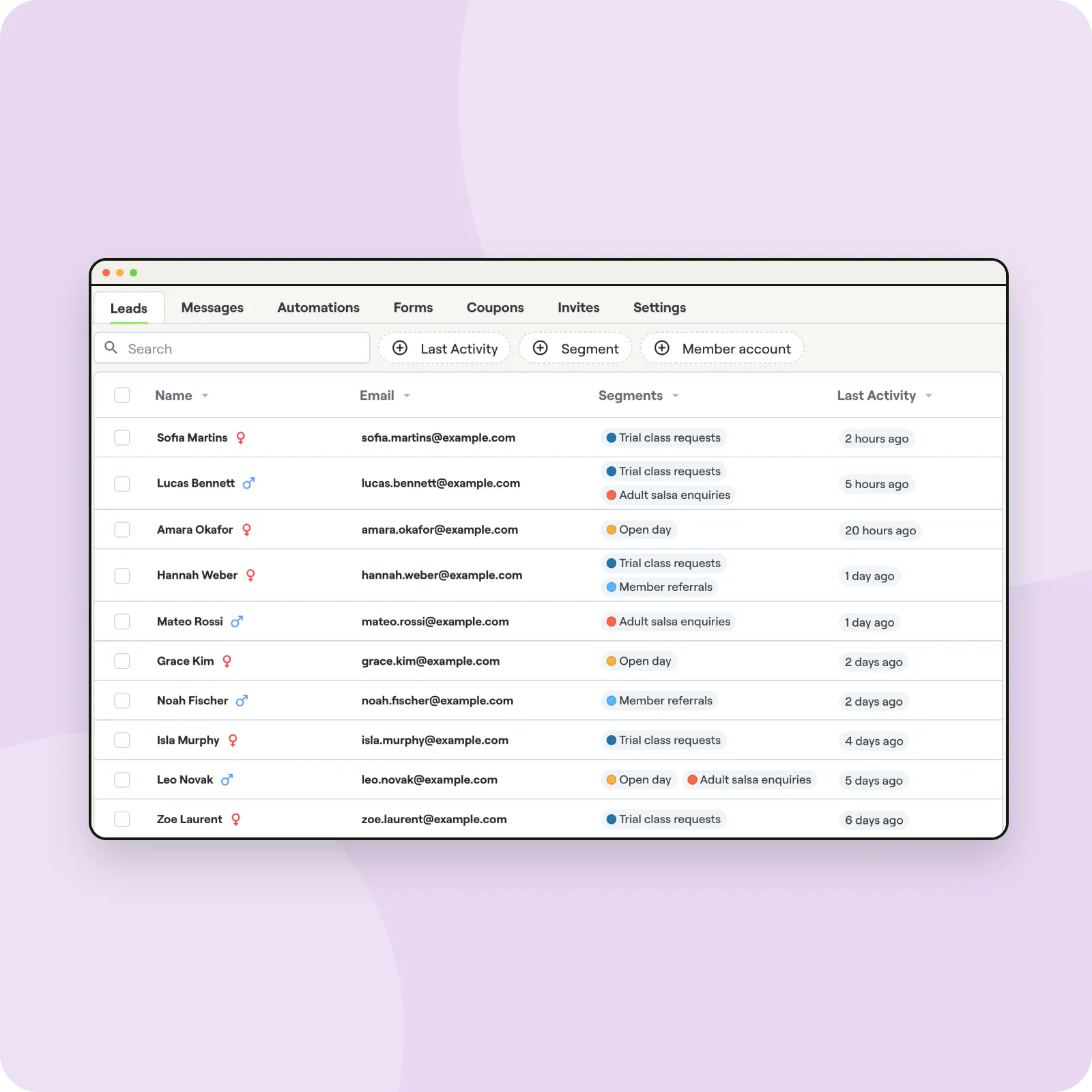
Then create a follow-up process.
For example:
When | What to do |
|---|---|
Immediately after an enquiry | Acknowledge the message and provide the relevant programme information. |
After two days | Follow up if the person has not booked a trial class. |
After the trial | Ask for feedback and share suitable membership options. |
After one week | Send a final helpful follow-up, where appropriate. |
You can automate dance studio marketing and follow-ups so that each message goes out on time.
Keep messages personal and useful rather than sending repetitive sales messages.
Example: a ballet enquiry
For example, a parent who enquired about ballet for a five-year-old should receive information about suitable junior classes, not a generic message advertising every programme.
A structured lead management process helps ensure that interested people do not disappear simply because someone forgot to respond. The same care helps you improve communication with dance parents once their child joins.
13. Create limited-capacity programmes and special offers
Special programmes can create additional reasons for prospective students to register.
Instead of promoting only your regular weekly classes, introduce activities that generate excitement and attract new audiences.
For example:
- Summer dance camps.
- Weekend workshops.
- Beginner dance courses.
- Holiday programmes.
- Guest instructor sessions.
- Competition preparation.
- Short choreography courses.
- Wedding dance lessons.
- Dance intensives for teenagers.
These programmes can be particularly useful for introducing your studio to people who are not ready to commit to a long-term membership.
A short beginner course, for example, could attract adults who are curious about salsa but hesitant to join a regular class.
You can also use limited-capacity sessions to encourage early registration.
Real value, not artificial urgency
Be transparent about the available places and registration deadline.
The objective is to create genuinely valuable opportunities rather than artificial urgency.
14. Encourage existing students to bring additional family members
For children's dance schools, parents are often already familiar with the studio and its instructors.
This gives you an opportunity to introduce additional programmes to their families.
For example, a child attending ballet might also enjoy jazz or contemporary dance.
A sibling might be interested in joining hip-hop classes.
A parent might discover an adult programme at the same studio.
Create relevant opportunities for families to explore additional activities.
You can:
- Promote sibling programmes.
- Offer introductory family workshops.
- Share information about additional age groups.
- Introduce family memberships.
- Offer suitable multi-class packages.
- Send targeted messages about new programmes.
Avoid assuming that every family wants additional classes. Make the opportunities visible and let parents decide.
Family accounts and consolidated membership management can also make registering multiple children more convenient.
15. Measure where your new students come from
One of the biggest marketing mistakes dance studio owners make is spending money and time promoting their business without understanding which activities actually generate registrations.
You need to know where new students discover your school and which marketing channels convert best.
Start by tracking the source of every new enquiry.
Possible sources include:
- Google search.
- Google Business Profile.
- Instagram.
- Facebook.
- Paid advertising.
- Existing member referral.
- Local school partnership.
- Community event.
- Website enquiry.
- Walk-in or direct contact.
Then measure the conversion process. Useful metrics include:
Metric | What it measures |
|---|---|
Enquiries | How many people contact your studio? |
Trial bookings | How many enquiries turn into trial classes? |
Trial attendance | How many people actually attend their introductory session? |
Registration conversion | How many trial participants become paying members? |
Cost per lead | How much does it cost to generate an enquiry? |
Customer acquisition cost | How much does it cost to acquire a new paying student? |
Revenue by acquisition source | Which channels generate the most valuable students? |
Example: Instagram vs Google
For example, imagine your studio receives 40 enquiries from Instagram and 20 from Google in one month.
However, only four Instagram enquiries become paying students, while ten Google enquiries convert.
Although Instagram generated more initial interest, Google might be delivering better results.
These insights help you allocate your marketing budget more intelligently.
Common marketing mistakes dance studios should avoid
These are the habits that most often keep interested people from becoming students.
Do
- Focus on the students and families who are most likely to benefit from your programmes.
- Create content with a clear purpose, whether that is building awareness, generating enquiries or encouraging registrations.
- Invest in local SEO. Your potential students are usually concentrated within a particular geographical area.
- Make registration easy. Do not force interested people to send several emails just to join a class.
- Follow up with enquiries. Many potential students need information or encouragement before making a decision.
- Track whether promotions generate long-term memberships rather than just one-time purchases.
- Involve existing students. Your current members can generate referrals and help you introduce additional programmes.
- Measure registrations. Likes and followers are not the same as new paying students.
Avoid
- Trying to target everyone.
- Posting without a strategy.
- Ignoring local SEO.
- Making registration difficult.
- Failing to follow up with enquiries.
- Offering discounts without measuring results.
- Ignoring existing students.
- Measuring social media engagement instead of registrations.
How Stepsi helps you attract and manage new dance students
Attracting new students is only the beginning. Your studio also needs a reliable process for turning enquiries into registrations and managing the new members who join.
Stepsi brings together lead management, online forms, registrations, memberships, communication and automations in one platform.
With Stepsi, dance studios can:
Capture every enquiry
- Collect prospective student enquiries through online forms.
- Import leads from CSV or Excel files.
- Organise prospects into segments.
- Track lead activity and conversion.
Turn interest into registrations
- Share registration links and invitations.
- Allow students and parents to register online.
- Customise the registration process.
- Offer memberships, class packages and trial bookings.
- Publish class schedules and booking options on the studio website.
Follow up, reward and measure
- Create discount coupons and promotional offers.
- Reward referrals with loyalty points.
- Send welcome messages and automated follow-ups.
- Promote workshops and events.
- Use AI analytics to understand student engagement and business performance.
For example, you could create a simple acquisition workflow:
A prospective student completes an enquiry form on your website. Their details are saved as a lead and added to the appropriate segment. They receive an initial message containing information about suitable classes. A follow-up is scheduled if they have not registered, and the studio team is notified when a personal response is needed.

Once the student registers, they can join through the Stepsi web app or mobile app, complete the required information, accept agreements and purchase a suitable membership.
From first enquiry to first membership
This connects marketing activity with the actual registration and management process, helping your team avoid manually transferring information between spreadsheets, email conversations and payment systems. See how iDance moved from pen and paper to Stepsi.
Final thoughts
Attracting more dance students requires more than posting regularly on social media or running occasional advertisements.
Successful dance studios combine a strong local presence, a clear identity, engaging content, relevant partnerships and an easy registration experience.
Start by understanding your ideal students and communicating what makes your school different.
Improve your Google presence, create a website that converts visitors into enquiries, offer introductory classes and build referral opportunities with your existing members.
Most importantly, measure the entire journey from the first enquiry to the first paid membership. Then keep the students you win: see how to improve dance student retention.
The goal is not simply to get more people interested in dance. It is to make it easy for the right people to discover your studio, experience your classes and become part of your dance community.
Frequently asked questions
How can I get more students for my dance studio?
Focus on local visibility, Google Business Profile optimisation, engaging social media content, introductory classes, referrals and an easy online registration process.
How do I promote my dance classes locally?
Use local SEO, community partnerships, school collaborations, open days, local events and targeted advertising to reach people living near your studio.
How can I get more children to join my dance school?
Build relationships with parents, offer beginner-friendly trial classes, collaborate with local schools and communicate the benefits of your children's programmes clearly.
How can I advertise adult dance classes?
Promote the social, recreational and educational benefits of dancing through local advertising, short class videos, beginner workshops and partnerships with local businesses.
How do I turn dance class enquiries into paying students?
Respond quickly, provide relevant class information, invite prospects to a trial session and follow up with suitable membership options.