

15 ways to increase dance studio revenue: additional income streams beyond class tuition
You can increase dance studio revenue beyond class tuition with private lessons, workshops, holiday camps, events, merchandise, studio rentals and online content. This guide covers 15 income streams, how to choose the right ones and how to check that each one pays.

Running a successful dance studio requires more than attracting students and collecting monthly tuition fees. You also need to manage operating costs, pay instructors, maintain your facilities and invest in activities that help your business grow.
For many dance schools, regular class tuition represents the largest source of income. While building a strong membership base is essential, relying exclusively on weekly classes can limit your growth opportunities.
Think about everything your studio already has: experienced instructors, dedicated teaching spaces, an established student community, a recognisable brand and a collection of dance-related resources. These assets can create additional income opportunities without necessarily requiring you to open another location or significantly increase your weekly timetable.
From private lessons and workshops to summer camps, merchandise, digital content and studio rentals, there are many ways to diversify your revenue.
The important thing is to choose opportunities that make sense for your audience, fit your existing resources and generate enough additional income to justify the time and costs involved.
Here are 15 practical ways to increase dance studio revenue beyond regular class tuition.
1. Offer private dance lessons
Private lessons are one of the most straightforward ways to generate additional income from your existing teaching resources.
Unlike regular group classes, private lessons provide individual attention and allow students to work towards specific goals at their own pace.
They can be particularly attractive to:
- Beginners who want additional support.
- Experienced dancers preparing for competitions.
- Students working on specific techniques.
- Couples preparing for their wedding dance.
- Dancers preparing for auditions.
- Students who want to learn choreography.
You can offer one-to-one sessions or sell packages containing several lessons.
For example, a student might purchase a package of five private ballet lessons or a couple might book four sessions to prepare a wedding performance.
Private lessons can also be scheduled during quieter hours when instructors and studio rooms are available.
To make the service financially worthwhile, calculate the instructor's compensation, room usage and administration costs before setting your prices.
Consider offering prepaid packages to encourage repeat bookings and provide more predictable income.
2. Introduce small-group coaching sessions
Private lessons are not the only way to offer more personalised instruction.
Small-group coaching allows several students to receive focused attention while sharing the cost of the session.
For example, you could organise:
- Technique improvement groups.
- Advanced ballet training.
- Turns and jumps workshops.
- Competition preparation.
- Partner dance practice.
- Choreography development.
- Performance preparation.
Example: a small-group technique session
Imagine offering a 60-minute technique session for six students, each paying £20. That generates £120 in gross revenue from one session.
The instructor can provide more individual attention than in a regular large class, while each student pays less than they would for a private lesson.
Small-group sessions are especially useful for intermediate and advanced dancers who want to improve particular skills.
You can also organise them around specific instructors or dance styles to make them more attractive to your existing members.
3. Organise specialist workshops and masterclasses
Workshops and masterclasses give students the opportunity to explore dance styles, techniques and choreography that might not be included in their regular classes.
They are also a good way to generate revenue without introducing another permanent weekly class.
Consider organising:
- Guest choreographer masterclasses.
- Contemporary dance workshops.
- Salsa and bachata intensives.
- Ballet technique workshops.
- Hip-hop choreography sessions.
- Musical theatre workshops.
- Partner dance technique classes.
- Dance improvisation sessions.
You can invite instructors from outside your studio to bring new perspectives and attract students who might not normally attend your classes.
A recognised guest instructor can also help generate interest beyond your existing membership base.
For example, a weekend masterclass with a popular choreographer could attract participants from several nearby dance schools.
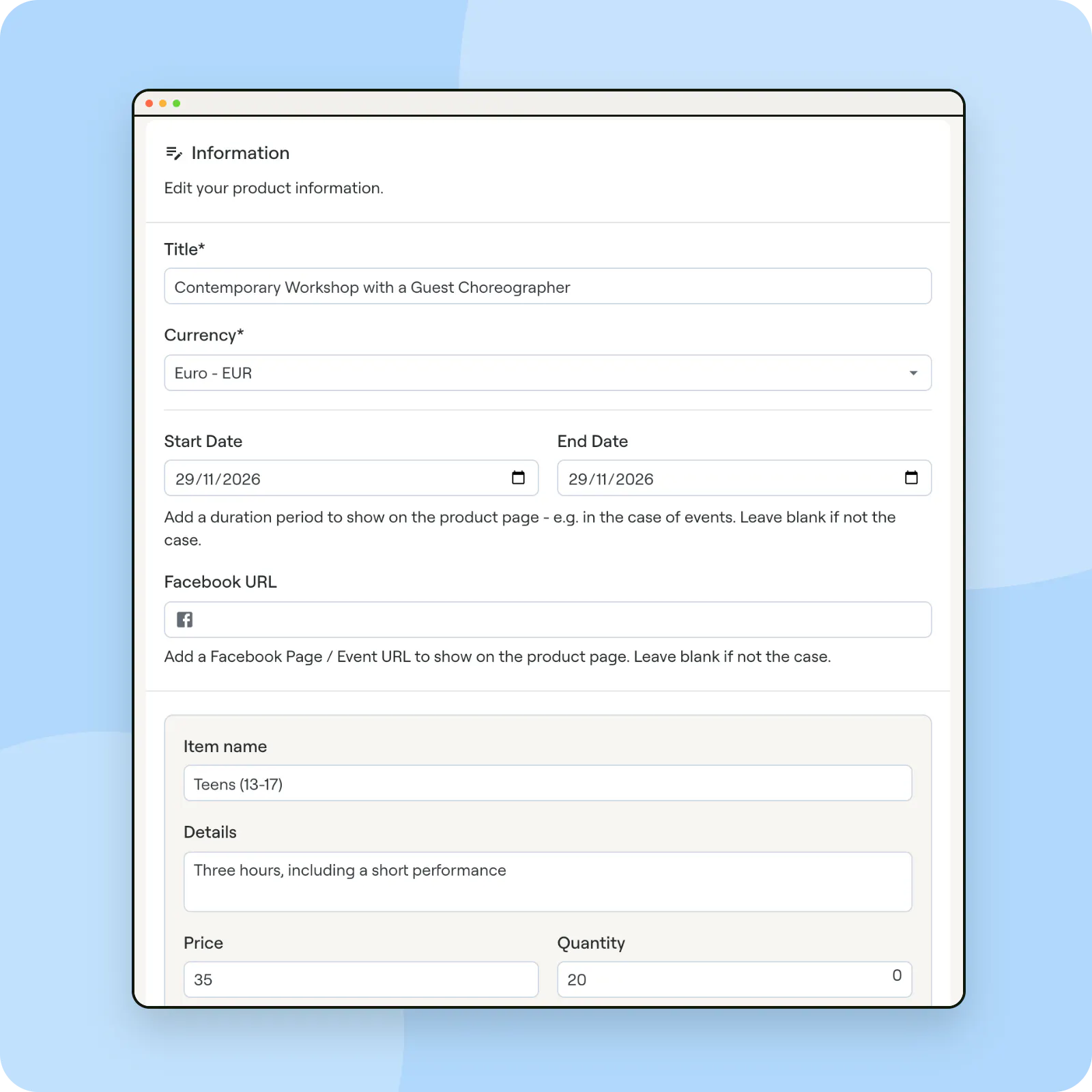
Promote workshops through social media, your website and targeted member announcements.
Set a registration deadline and minimum participant number so that you can evaluate whether the event is financially viable before committing to instructor and venue costs.
4. Run school holiday dance camps and intensives
School holidays provide an opportunity to reach families who need activities for their children while schools are closed.
Instead of relying entirely on your regular term timetable, you can introduce dedicated holiday programmes.
Examples include:
- Summer dance camps.
- Easter dance workshops.
- Christmas dance programmes.
- Hip-hop intensives.
- Ballet development camps.
- Multi-style dance weeks.
- Musical theatre camps.
- Choreography and performance camps.
A holiday camp might run for several hours per day over three to five days.
You can charge a fixed programme fee or offer daily attendance options.
To make camps attractive, combine dance training with creative activities, group challenges, choreography and a final performance for parents.
Holiday programmes can also introduce your studio to families who have never attended your regular classes.
Some participants might subsequently register for weekly lessons.
When planning a camp, calculate instructor hours, additional staff requirements, facilities, materials and any relevant insurance or safeguarding requirements. Set capacity according to your space and appropriate supervision arrangements.
Pre-registration and deposits can help you assess demand before committing significant resources.
5. Host children's dance birthday parties
Dance-themed birthday parties can be another attractive income stream for studios specialising in children's programmes.
Parents are often looking for birthday activities that are organised, entertaining and suitable for a particular age group.
Your studio already has many of the elements needed to deliver this service: a dance floor, music equipment, instructors and a suitable environment for group activities.
You could offer packages such as:
Package | What it includes |
|---|---|
Beginner dance party | A fun introduction to a dance style, with simple choreography and games. |
Princess or ballet party | A themed experience with beginner ballet activities and a short performance. |
Hip-hop party | An energetic session where children learn a group routine. |
K-pop dance party | A choreography-focused experience based on popular music and dance trends. |
Private dance party | A customised session for a birthday group with a dedicated instructor. |
Packages could include studio hire, an instructor, a defined activity programme and optional extras.
You might also offer additional services such as decorations, themed backgrounds or a short video of the choreography, subject to appropriate permissions.
Make sure you define party duration, participant limits, supervision responsibilities and what is included in the price.
Weekend mornings and afternoons can be particularly useful for hosting parties when regular classes are not taking place.
6. Generate additional income from recitals and performances
Dance recitals and showcases are important parts of the student experience, but they can also provide additional revenue opportunities.
Instead of treating performances purely as an expense, plan them as organised events with several potential income sources.
Consider:
- Audience ticket sales.
- VIP or premium admission options where appropriate.
- Programme advertising.
- Local business sponsorships.
- Professional performance recordings.
- Photography packages.
- Merchandise.
- Special performance workshops.
For example, a local business might sponsor a recital in exchange for having its logo included in the event programme or displayed at the venue.
You could also offer families professionally recorded performances as an optional purchase.
When selling tickets, make the purchasing process simple and clearly communicate prices, availability and event information.

Keep performance costs transparent
Keep participant fees and costume costs transparent. If you charge separately for production expenses, explain what they cover rather than presenting them as an undisclosed additional charge.
The goal is to create an enjoyable event for families while making sure the performance is financially sustainable for your studio.
7. Sell branded studio merchandise
Your studio's brand can generate revenue outside the classroom.
Students and families often enjoy wearing clothing that represents their dance school, particularly during performances, competitions and social events.
Popular merchandise includes:
- T-shirts.
- Hoodies.
- Sweatshirts.
- Dance bags.
- Water bottles.
- Caps.
- Tote bags.
- Studio accessories.
You can create collections for specific programmes or occasions.
For example, you might sell a junior ballet collection, a competition team hoodie or a limited-edition recital T-shirt.
Merchandise also acts as a form of visibility. When students wear your studio's branded clothing outside classes, more people become familiar with your name.

Be careful with inventory
Buying large quantities before knowing demand can tie up cash and leave you with unsold products.
Consider using pre-orders for new collections or working with suppliers who allow smaller production runs.
Calculate the product cost, printing, delivery, payment processing and any handling expenses before setting your retail prices.
8. Sell dancewear, costumes and accessories
Your existing members already purchase dance-related products throughout the year.
Instead of leaving every purchase to external retailers, you could offer a convenient selection of products through your studio.
Depending on your students' needs, this could include:
- Ballet shoes.
- Dance tights.
- Leotards.
- Jazz shoes.
- Practice clothing.
- Hair accessories.
- Dance bags.
- Training equipment.
- Performance costumes.
This is particularly convenient for children's dance schools, where parents frequently need to purchase new clothing as children grow or progress to different programmes.
You can also offer pre-arranged costume packages for recitals or performances.
For example, a junior ballet costume package could include the required costume and selected accessories.
Make sure that parents understand which items are required, which are optional and what each package includes.
You do not necessarily need to maintain a large physical shop. An online catalogue with selected products and convenient collection at the studio can be sufficient to start.
Use pre-orders for seasonal or performance-related products wherever possible. This helps you avoid purchasing stock that you might not sell.
9. Rent out unused studio space
Your studio premises are one of your biggest operating expenses.
However, you might not use every room throughout the entire day.
If you have unused capacity during mornings, weekends or quieter periods, renting out your space can help generate additional income.
Potential customers include:
- Independent dance instructors.
- Yoga teachers.
- Pilates instructors.
- Personal trainers.
- Choreographers.
- Theatre groups.
- Community organisations.
- Photographers requiring an appropriate creative space.
For example, you could rent a studio room to a yoga instructor every weekday morning before your regular dance classes begin.
Alternatively, an independent choreographer might rent the space for rehearsals during weekends.
Before offering rentals, establish clear rules regarding:
- Rental prices and minimum booking periods.
- Permitted activities.
- Access and opening hours.
- Cleaning responsibilities.
- Equipment usage.
- Insurance and liability.
- Security and keys.
- Damage and cancellation policies.
Check before you rent
Check your lease, insurance and any applicable permissions before renting the premises to external businesses.
Rental income can be particularly attractive because it makes better use of an existing asset without requiring you to deliver another class yourself.
10. Run dance programmes at schools and community organisations
Your studio does not have to generate all its revenue within its own premises.
You can take your teaching services to other organisations through paid programmes and partnerships.
Potential partners include:
- Primary schools.
- Secondary schools.
- Nurseries.
- After-school clubs.
- Community centres.
- Youth organisations.
- Holiday activity providers.
For example, you could offer a weekly after-school hip-hop programme at a local primary school.
The school pays your studio for delivering the programme, or a separate arrangement can allow parents to pay for participation.
Other opportunities include short dance projects, performance preparation and holiday workshops.
This model can help you reach students who might eventually register for your regular studio classes.
When structuring agreements, define the delivery schedule, instructor responsibilities, payment terms, safeguarding requirements and cancellation arrangements.
It is also important to calculate travel and preparation time, not just the hours spent teaching.
11. Offer corporate dance workshops and private group experiences
Dance can also be marketed outside traditional educational settings.
Businesses and organisations sometimes look for activities that bring people together, create memorable experiences or provide entertainment for private events.
Your studio could offer customised group sessions for:
- Corporate team-building activities.
- Company celebrations.
- Private parties.
- Hen parties.
- Wedding groups.
- University societies.
- Community gatherings.
For example, you could offer a 90-minute beginner salsa experience for a company's team event.
Another option is creating a wedding dance package for couples who want to prepare a first dance with the help of an instructor.
Corporate and private group sessions can command a different price structure from regular weekly tuition because they involve a dedicated instructor, customised preparation and a specific event.
Create clearly defined packages with different durations and group sizes.
For private events, consider travel, preparation, equipment and any additional venue requirements when calculating your prices.
12. Sell online dance classes and paid video content
Your teaching resources do not have to generate revenue only during scheduled studio hours.
You can also package educational content into digital products.
Examples include:
- Recorded choreography tutorials.
- Ballet technique lessons.
- Salsa and bachata combinations.
- Beginner dance courses.
- Flexibility and conditioning programmes.
- Competition preparation videos.
- Specialised training tutorials.
You could sell individual videos, create themed collections or offer access through a paid video membership.
For example, an instructor might record a series of beginner salsa lessons that students can access whenever they want.
Another option is to provide existing members with additional training videos to practise between regular classes.

This can increase the perceived value of your memberships while creating opportunities to sell content to people who do not live near your studio.
Pay attention to production quality, video access permissions and copyright requirements for music and choreography.
Start with subjects where your instructors have particular expertise rather than attempting to produce a large video library immediately.
13. Offer audition, examination and competition preparation
Students who want to progress beyond recreational dance classes often need more specialised training.
You can create premium programmes for students preparing for:
- Dance auditions.
- Professional training applications.
- Competition performances.
- Dance examinations.
- Scholarship opportunities.
- Solo performances.
- Advanced choreography assessments.
These programmes can include individual coaching, technique sessions, mock auditions and choreography feedback.
You can sell individual preparation sessions or create structured packages over several weeks.
For example, an instructor could offer a four-week audition preparation programme covering technique, choreography, performance skills and audition practice.
You could also organise specialist preparation workshops for a group of students.
Promise preparation, not results
Make sure the programme's description is realistic about what it provides. Do not imply guaranteed audition success or examination results.
These services allow your studio to support experienced dancers while offering additional value beyond ordinary weekly lessons.
14. Organise social dance evenings and paid practice sessions
For adult dance studios, social dancing can provide an additional source of income while strengthening the community around your classes.
Many students want opportunities to practise what they have learned outside their regular lessons.
You can organise:
- Salsa social evenings.
- Bachata nights.
- Ballroom practice sessions.
- Beginner-friendly dance parties.
- Themed dance events.
- Guided practice sessions.
- Guest DJ evenings.
You could charge an admission fee, offer discounted entry to members or combine a short workshop with a social event.
For example, an evening might start with a 45-minute beginner salsa workshop, followed by two hours of social dancing.
You can also sell multi-event passes or include selected events in premium membership packages.
Consider venue capacity, music licensing, staffing, security and any other event-related requirements before organising regular social events.
These activities can generate additional revenue while giving students more reasons to remain connected to your studio.
15. Sell gift vouchers and prepaid class packages
Gift vouchers are a simple way to reach people who have never attended your studio.
Someone might want to buy a dance experience for a birthday, anniversary, Christmas present or wedding gift.
Offer vouchers for:
- One introductory dance class.
- A private lesson.
- A beginner dance course.
- A workshop.
- A set number of classes.
- A couple's dance experience.
You can also sell prepaid class packages.
For example, a customer might purchase five or ten classes in advance and use them over a defined period.
Packages are particularly useful for adult recreational students who cannot commit to the same weekly schedule.
Clearly explain the package validity, eligible classes, booking requirements and refund conditions.
Gift vouchers and prepaid packages should be easy to purchase and redeem.
They can introduce new students to your studio while encouraging existing members to purchase additional classes in advance.
Compare the 15 ways to increase dance studio revenue
Use this overview to see how much setting up each idea takes, how its income arrives and which studios it suits best.
Revenue stream | Setup effort | Revenue pattern | Best suited to |
|---|---|---|---|
1. Private lessons | Low | Repeat bookings | Most studios |
2. Small-group coaching | Low | Repeat bookings | Studios with intermediate and advanced dancers |
3. Workshops and masterclasses | Medium | Occasional | Specialist instructors |
4. Holiday camps | Medium | Seasonal | Children's studios |
5. Birthday parties | Medium | Occasional | Children's studios |
6. Recitals, sponsorship and recordings | High | Seasonal | Established studios |
7. Merchandise | Medium | Ongoing sales | Studios with a loyal community |
8. Dancewear and costumes | Medium–high | Ongoing sales | Children's studios |
9. Studio rentals | Low–medium | Recurring | Studios with unused space |
10. School programmes | Medium | Contract-based | Children's studios |
11. Corporate workshops | Medium | Occasional | Adult dance studios |
12. Online classes and videos | High initially | Potentially recurring | Studios with digital expertise |
13. Audition, exam and competition preparation | Medium | Repeat bookings | Advanced dance academies |
14. Social dance events | Medium | Recurring or occasional | Adult dance studios |
15. Gift vouchers and class packages | Low | Seasonal and occasional | Most studios |
These effort levels are general planning estimates, not profitability rankings. Actual costs depend on staffing, facilities, local demand and delivery arrangements.
How to choose the right additional revenue streams
You do not need to introduce all 15 ideas at once.
The most successful approach is to start with opportunities that use your existing instructors, facilities and student community.
Before launching a new offer, evaluate four things:
- Demand: Are your existing members or local prospects genuinely interested?
- Direct costs: What will you spend on instructors, products, venues, equipment and delivery?
- Operational effort: How much additional work will the offer create?
- Strategic fit: Does the new service strengthen your dance studio's identity and student experience?
For example, a children's ballet school with strong weekend attendance might find birthday parties and holiday camps particularly attractive.
An adult salsa studio might have more success with social dance evenings, guest workshops and private lessons.
A studio with several unused rooms might generate additional income through rentals.
The best opportunities depend on your particular business.
Understand the difference between revenue and profit
It is important to remember that additional sales do not automatically translate into higher profits.
A workshop generating £600 in ticket sales might require £250 for the instructor, £75 for room costs and £25 in other variable expenses.
That leaves £250 in contribution towards the studio's remaining overheads and profit, before any additional fixed costs, taxes or other applicable expenses.
Calculate the expected contribution before launching each offer.
For a limited-capacity event, you can also work out the minimum number of registrations required to cover its costs.
For example:
- Ticket price: £25.
- Variable cost per participant: £5.
- Fixed event costs: £240.
- Contribution per ticket before fixed costs: £20.
- Break-even registrations: 12.
You would need 12 participants to cover those example costs.
This calculation helps you make better decisions about pricing, minimum attendance and whether a new programme is financially worthwhile.
Track revenue and expenses separately for each income stream so you can see which activities genuinely contribute to your business.
How Stepsi helps you manage multiple dance studio revenue streams
Introducing new income opportunities is one thing. Managing them efficiently is another.
As your studio starts selling workshops, tickets, merchandise, private sessions and digital products, you need a reliable way to manage orders, payments, registrations and communication.
Stepsi brings these activities together in one platform.
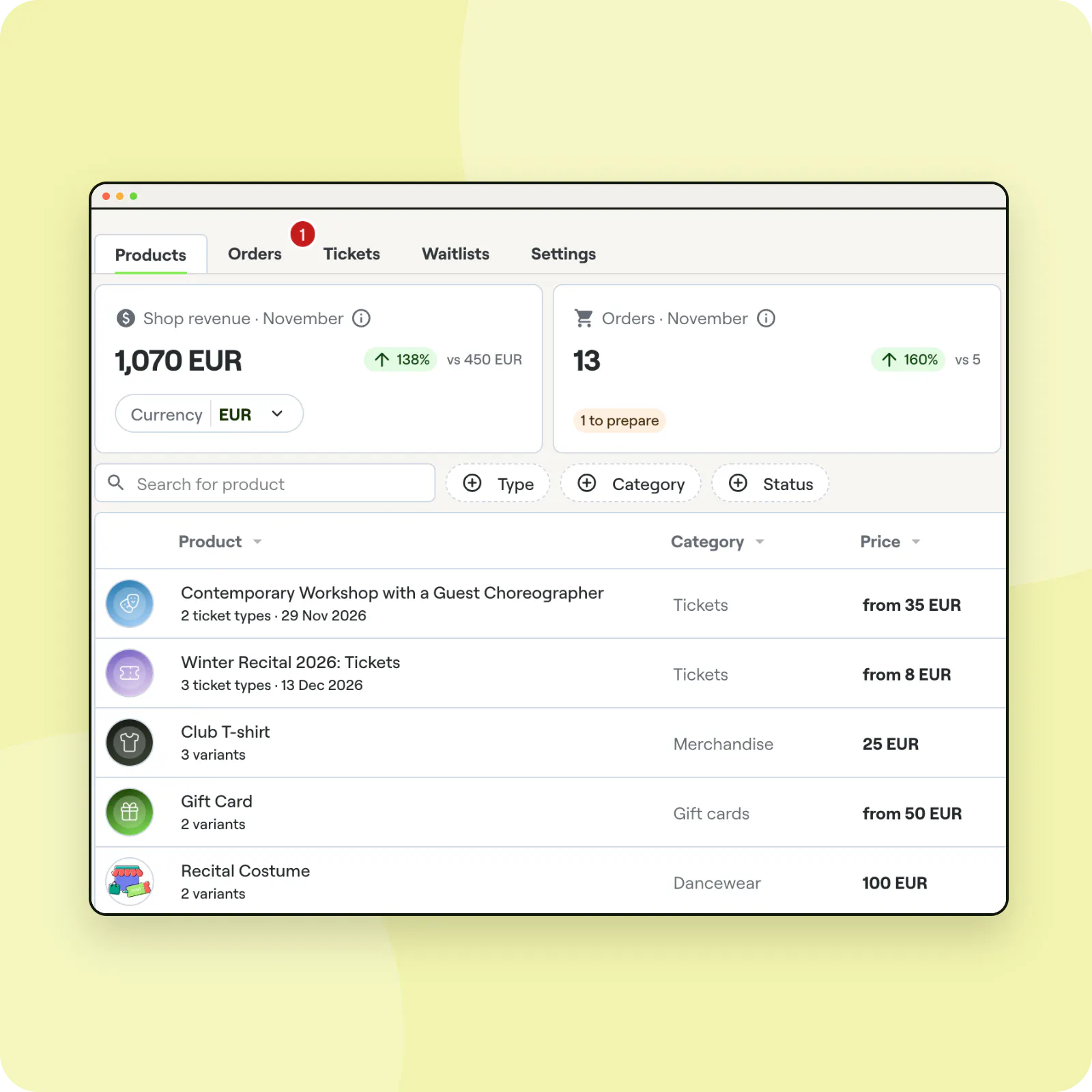
With Stepsi, dance studio owners can:
Sell products, tickets and videos
- Sell physical and digital products through the online shop.
- Create products with variants, quantities and stock limits.
- Set sales windows and additional checkout requirements.
- Sell workshop registrations and event tickets.
- Generate PDF tickets with QR codes.
- Support Apple Wallet and Google Wallet passes.
- Publish and sell access to paid video content.
Run memberships, events and payments
- Offer flexible memberships and prepaid session packages.
- Organise one-time and recurring calendar events.
- Create online registration and enquiry forms.
- Manage orders, invoices and refunds.
Promote, automate and measure
- Promote additional services through targeted messages.
- Automate communications following shop orders and membership purchases.
- Analyse revenue by class, instructor, calendar, payment method and source.
- Identify top-selling products through analytics.
You can also use the Stepsi website builder to publish your classes, memberships, events and shop products on your own studio website.
Every revenue stream in one platform
Instead of managing different income sources through separate spreadsheets, payment tools and email conversations, you can connect much of the administration within one platform.
This makes it easier to experiment with new revenue opportunities while keeping your existing studio operations organised.
Final thoughts
Increasing dance studio revenue does not always mean attracting more students or increasing tuition fees.
Your studio already has valuable resources that can support additional income: experienced instructors, available rooms, existing members, teaching materials and a recognised local brand.
Start by identifying opportunities that fit your audience and make good use of your existing resources.
Private lessons, workshops, holiday camps, events, merchandise, studio rentals and digital products can all provide additional income when they are planned and priced correctly.
Test new offers on a manageable scale, track their profitability and expand the ones that deliver genuine value.
A financially stronger dance studio does not depend on a single source of income. It builds several complementary revenue streams around the experience, expertise and community it has already created.
Frequently asked questions
What is the most profitable way to make more money with a dance studio?
There is no universally most profitable option. Private lessons, specialist workshops, holiday camps and studio rentals can be attractive depending on your available instructors, capacity, costs and local demand. Compare the additional contribution each activity generates rather than looking only at total sales.
How can a small dance studio increase its revenue?
Start with services that use existing resources, such as private lessons, small-group coaching, workshops and merchandise pre-orders. These can be tested without immediately committing to additional premises or permanent staff.
How can a dance studio make money outside regular classes?
Potential options include private lessons, ticketed events, birthday parties, holiday camps, merchandise, studio rentals, digital training videos and corporate workshops.
Should a dance studio sell merchandise?
Merchandise can be a useful additional income source, particularly when students and families already have an interest in branded clothing and accessories. Pre-orders and small initial collections can help reduce the risk of unsold inventory.
How can I track revenue from different dance studio activities?
Separate revenue and costs by category, such as tuition, workshops, events, merchandise and private lessons. Review sales, direct costs and contribution over time to identify which activities are worth expanding.